In the 1920s, members of the Osage Native American tribe of Osage County, Oklahoma, are murdered after oil is found on their land, and the FBI decides to investigate.
Review
Emma (Hooligans OG) – I’m not usually one for Scorsese’s films (*hides*) as they focus largely on the stories of old white men – and I feel there are other important stories to be told – but when I saw the trailer for this, I turned to my partner and said, “We’re watching this”.
Killers of the Flower Moon has all the usual hallmarks of a Scorsese film (it’s based on a true story, it has a whodunit plot, a commanding voiceover narration, an epic score, and outstanding performances from Scorsese’s favourites, Leonardo DiCaprio and Robert de Niro) but that’s not what grabbed me.
It was Scorsese’s choice to steer away from a typically male-centred plot and make indigenous people, specifically female Native Americans the focus.
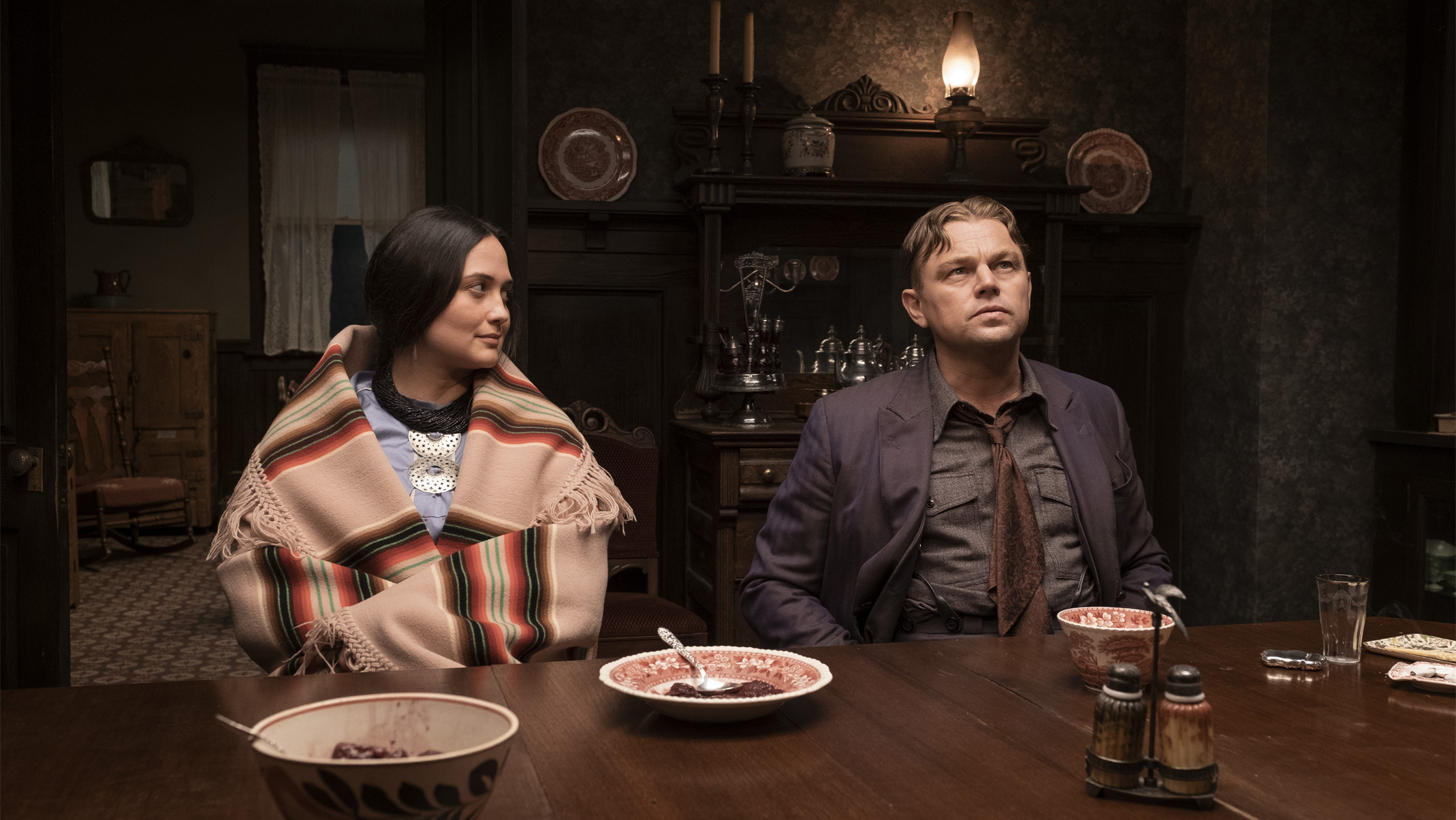
Killers of the Flower Moon tells the true story of murders that took place during the 1920s in the oil-rich area of the Native American Osage Nation, in Oklahoma. As white Americans got wind of the riches that could be exploited there, they flocked to it to put down roots. The Osage people benefitted greatly from this wealth and we see it clearly depicted on screen, down to the garments and jewellery they wear. Though, even when pressured to conform to Western ideals, the Osage are still true to their heritage, proudly wearing traditional shawls and regalia when in public, and practising rituals and ceremonies they’ve performed for thousands of years.
What we see after the opening credits roll is a foreshadowing of what’s to come: the murders of Osage people that were swept under the rug.
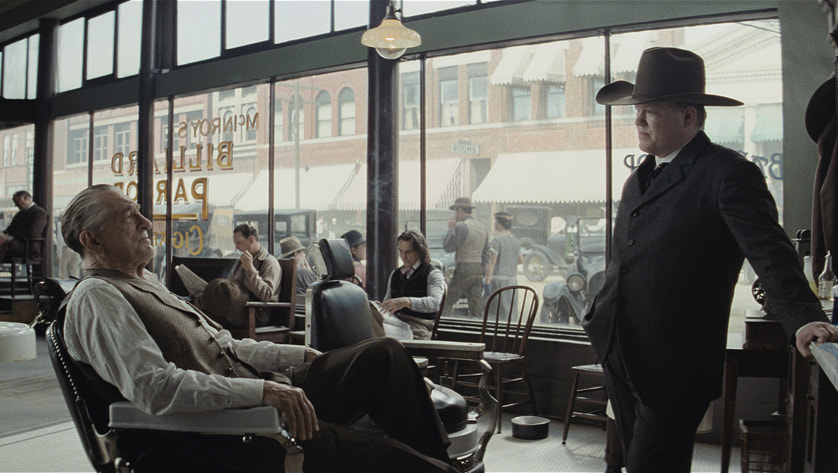
Leonardo DiCaprio (Ernest Burkhart) returns home from WW1 to stay with his Uncle Will “King” Hale, played by Robert de Niro. Despite Hale’s pleasant and agreeable Southern disposition, you’re left holding your breath waiting for the it to break. This becomes even more difficult to reconcile when it’s revealed how friendly King Hale is with the Osage people, even going as far as speaking their language. This is when things started to feel a little bit Get Out for me.
While the Osage have “headrights” that entitle them to their share of oil, U.S. law requires them to have “guardians” to manage their wealth. I’m sure you can see how this could cause things to get ugly. We soon learn that white men have been able to enjoy this wealth by marrying into Osage families. Hale’s first seed to plant in Ernest’s mind is that he must find an Osage woman to marry and settle down with to keep the wealth in the family. He mentions a family friend, Mollie, who is unmarried and cares for her ailing mother. This is all explained to Ernest by Hale in a very disarming, benevolent way, and we even see a little of Ernest’s naiveté here. This makes you warm a little to him – but don’t get your hopes up, that’ll soon change.
Ernest meets Mollie while offering her “cabbie” services and we see a sort of meet-cute unfold. From the moment Mollie (played by the brilliant Lily Gladstone) appears on the screen, you’re drawn in by her austere, calm nature. My partner joked that, likely, after the casting agent saw Gladstone’s face, said “We’ve found her!” and chased everyone else away. Gladstone’s face – even in its spell-binding placidness – tells a thousand words.
Indigenous Americans are rarely portrayed in such a regal way – a stark contrast to their “savage” nature that has been depicted in the media. The Osage’s stoicness, a kind of quiet confidence that makes it hard to look away, is even alluded to when King Hale warns Ernest not to run his mouth as the Osage don’t respond well to mindless banter. It’s interesting, then, that a woman of such regality would fall for a cheeky country bumpkin like Ernest.
We revel in Mollie and Ernest’s love, and for a moment at their wedding, seeing the smiling white folk mix with Osage people with ease, you believe that it’s all hunky-dory in Gray Horse.
The foreshadowing is unveiled and we see that one by one, each of Mollie’s three sisters, and her mother, become sickly or are killed off, as directed by Hale. Ernest plays a starring role in the murders, returning to Mollie’s comforting arms each night. It’s only a matter of time before it’s Mollie’s turn, and Hale suggests Ernest draw the process out by adding poison to Mollie’s insulin that he injects into her each night.
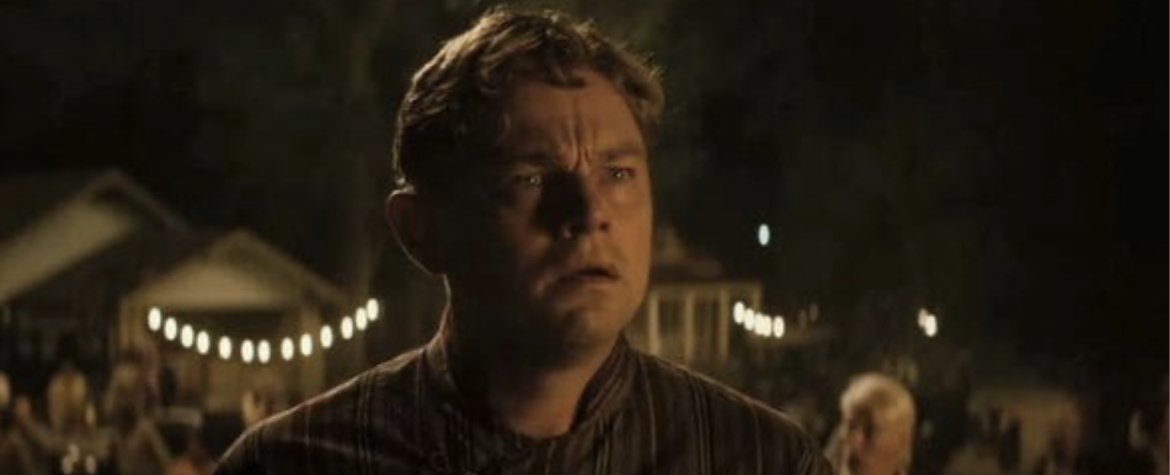
We see Mollie (naturally) fall into a deep depression after mourning the death of her family, getting physically weaker and weaker as well. She’s aware something is afoot but is still clearly so devoted to Ernest, never once giving away that she might know something, though she does meekly ask him about the investigations into their deaths. Not satisfied with Ernest’s placations, Mollie hires a private investigator, but Ernest and his brother quickly nip that situation in the bud by killing him, too. She then decides to travel by train to Washington to appeal to President Coolidge. Soon enough, an FBI agent appears at Ernest’s door. This is when everything starts to unravel.
I don’t want to give anything else away. This movie may just be Scorsese’s best yet, and at 3 hours and 26 minutes, it’s one of his lengthiest. But don’t let that deter you from sitting through it. Although the movie was long, I was gripped from the get-go because it deviated so much from Scorsese’s usual scenes, and the cast (including a cameo from Brendan Fraser as Hale’s attorney) absolutely delivered. 9/10
What did you think of the movie? Drop us a mail at bigscreenhooligans@gmail.com or leave us a comment.
Don’t forget to follow us on our social media platforms:
Facebook – bigscreenhooligans
Twitter – @BigHooligans
Instagram – bigscreenhooligans
 bigscreenhooligans.com